
Ames Epoxy Flooring installs flake epoxy floors in Ames, IA, serving surrounding cities including Huxley, Boone, Ankeny, Nevada and Polk City. A flake floor, sometimes called a chip or broadcast floor, is the system most garage owners choose: a 100% solids epoxy base with colored vinyl chips thrown into it while wet, sealed under a clear, hard topcoat. It hides grit, salt residue and small slab blemishes, adds texture underfoot and gives a finished look that holds up to daily use.
The flake is the part people see, but it is not what makes the floor last. That comes from diamond grinding, a moisture test written into the scope before the price is final, repairs ground flush, and a topcoat built to a stated thickness. After more than twenty years of coating central Iowa garages, basements and shops, we put as much attention into the layers under the chips as into the blend you pick.
How a Flake Floor Is Built
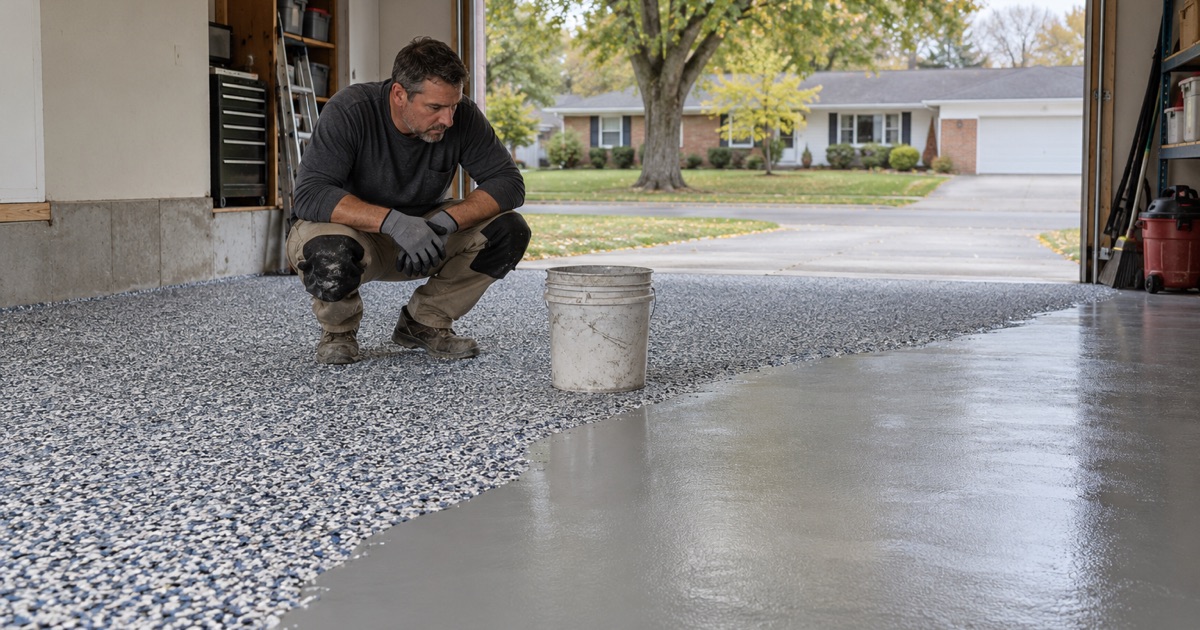
Ground and Repaired Slab
Every flake floor starts with a slab diamond ground to an ICRI concrete surface profile, never an acid etch. Cracks, spalls and pitting are filled and ground flush, and control joints are filled or kept as clean lines depending on how much the slab moves.
Grinding dust is captured at the machine by a vacuum. It stays out of the house and away from floor drains, and the slab is vacuumed again before the base coat goes down.
Epoxy Base Coat
The base coat is a 100% solids epoxy, often tinted to match the flake blend so any small gaps between chips do not stand out. It wets into the ground concrete and builds thickness, giving the chips something solid to sit in.
Where the moisture test calls for it, a moisture-mitigation primer goes down under the base. The base coat thickness is named in the proposal so it can be checked against the quote.
Flake Broadcast
While the base is still wet, vinyl flake is thrown by hand across the floor. On a full broadcast, it is applied until no more will stick and the base color disappears, giving the deepest texture and the best cover over slab flaws.
Once the base cures, loose chips are scraped and vacuumed off. Scraping knocks down sharp edges and high spots so the topcoat can encapsulate the flake evenly.
Clear Topcoat
The clear topcoat seals the flake and takes the wear of tires, boots and grit. We usually use a polyaspartic topcoat for its abrasion resistance and its resistance to yellowing in sunlight, which matters near garage doors.
The number of topcoats and their build decide how smooth or textured the finished floor feels. More topcoat gives a smoother, easier-to-clean surface; less leaves more of the chip texture for grip.
Choosing Flake Blend and Size
Color Blends
Flake comes in blends of two, three or more colors, from neutral grays and tans to bolder mixes with black, red or blue accents. Gray blends are popular in garages because they hide tire marks, salt residue and dust.
We bring sample boards and look at them in your space. Colors can read quite differently under garage LED fixtures, basement lighting and daylight from an open door.
Chip Size
Larger chips create a bolder, more visible pattern, while smaller chips give a finer, more uniform speckle closer to granite. Medium chips are the usual middle ground for garages.
Chip size also affects texture. Larger chips on a full broadcast leave a more noticeable surface under the topcoat, which can help grip but takes a little more effort to clean.
Full or Partial Broadcast
A full broadcast covers the base completely and gives the most durable, textured result. A partial broadcast scatters fewer chips so the base color shows through, which costs less and gives a cleaner, more minimal look.
Partial broadcasts show slab blemishes more, since less flake covers the surface. We recommend full broadcast for most garages and shops, and partial for spaces like laundry rooms where a lighter look is preferred.
Where Flake Floors Work Best
Garages Through an Iowa Winter
Garages are where flake floors shine. The texture hides the salt residue and grit that ride in on tires, and the topcoat keeps calcium chloride and rock salt brine on the surface where it can be squeegeed out the door instead of soaking into bare concrete.
Cure schedules follow slab temperature and dew point, so an unheated garage in the middle of a central Iowa winter usually waits for spring. Coating a cold slab risks blush and a weak bond.
Basements, Laundry Rooms and Home Gyms
In basements, a flake floor gives a durable, easy-to-clean surface for laundry rooms, workshops and home gyms. The texture helps where water lands, and rubber gym mats sit well on a cured floor.
The moisture test matters most in basements, where vapor and water history decide whether the floor will hold. A flake floor does not stop seepage and is never sold as radon work.
Shops and Light Commercial Spaces
Workshops, small businesses, locker rooms and service counters use flake floors for their durability and cleanability. In wet areas, a quartz broadcast or extra grit in the topcoat adds grip.
Commercial flake floors can be phased around business hours. Low-odor products are available for occupied spaces as a comfort choice.
Caring for a Flake Floor
A flake floor needs little more than regular sweeping and a damp mop with a mild cleaner. Grit is what dulls a topcoat over time, so a quick sweep after winter driving does more for the finish than any special product.
In winter, push slushy brine out the door with a squeegee rather than letting it dry into a white film. If the topcoat dulls in the wheel paths after years of use, it can be lightly sanded and recoated, refreshing the shine without redoing the flake.
- 20+ Years on Iowa Concrete
- Moisture Tested in Writing
- Free Estimates