Epoxy Flooring in Ames, IA, Built on a Tested Slab

Diamond-ground prep, a written moisture test and a proposal that names every coat before the price is final.

Ames Epoxy Flooring has spent 20+ years putting down epoxy flooring in Ames, IA, from garage floors and damp basements to polished concrete, polyaspartic and metallic finishes, and the commercial, industrial, ESD and kitchen floors a business runs on. Every job begins with the concrete rather than the color chart, because a coating is only ever as strong as the slab it bonds to.

In practice that means a diamond grinder or a shot blaster instead of an acid etch, a moisture test written into the scope before the price is settled, and a proposal that names the product line, the number of coats and the finished thickness. When the work is done, you can hold the floor up against the quote and check it line by line.

Central Iowa concrete sees brine-soaked tires all winter, basements set in wet glacial till, and garages too cold to cure a resin for months at a stretch. The sections below cover how we handle each of those, what a coated floor can and cannot fix, and where the real cost of a floor sits.

Get Your Free Quote

Fast response • No obligation

So we can reach you about your request.

So we can send you a confirmation after you submit this inquiry form.

  • 20+ Years on Iowa Concrete
  • Moisture Tested in Writing
  • Free Estimates

What we do

Our Services

Epoxy floors for Ames garages, basements and businesses

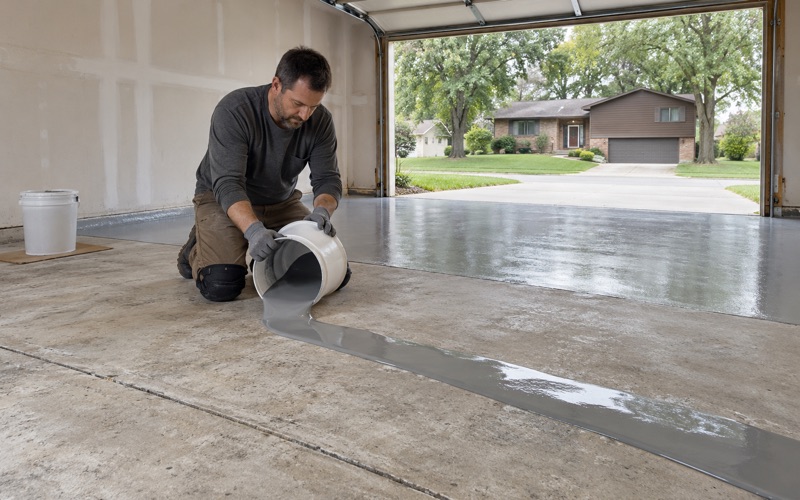
The first coat of gray epoxy poured in a ribbon onto a ground garage slab in Ames, ready to be spread.

Epoxy Garage Floor

Ground, tested and built to a stated thickness, our garage floor systems stand up to hot tires, brine and a central Iowa winter.

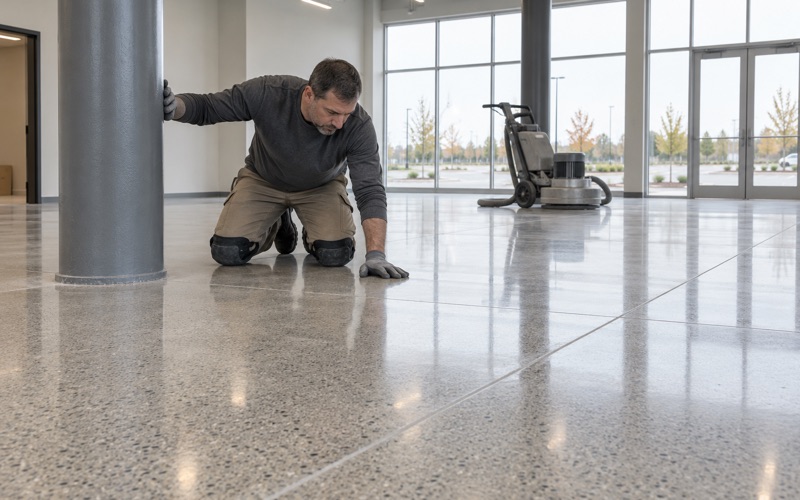
A satin polished concrete floor showing fine aggregate in the open lobby of a new office building in an Ames business park.

Polished Concrete Floors

Ground, densified and polished from the slab itself, a low-maintenance concrete floor for shops, stores, offices and finished basements.

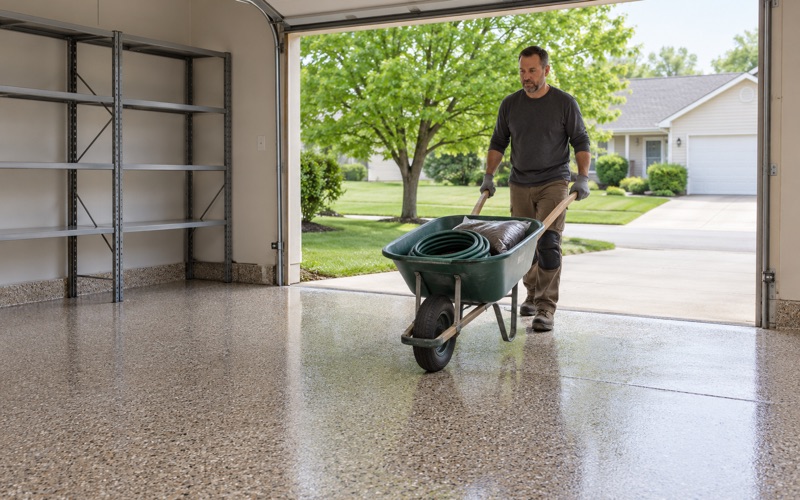
Garden tools wheeled back onto a same-day polyaspartic flake floor in an Ames ranch house garage.

Polyaspartic Floor Coating

Fast-curing, color-stable polyaspartic coatings over a diamond-ground slab, applied only when slab temperature and dew point allow.

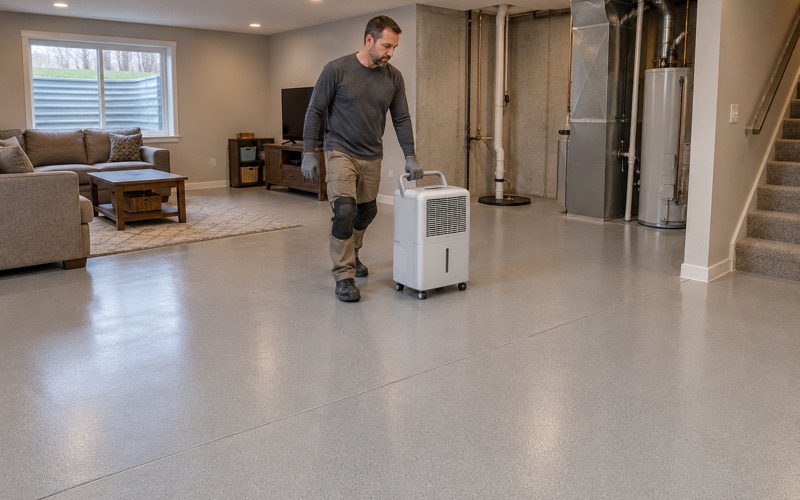
A dehumidifier rolled onto a newly coated gray basement floor in an Ames home, next to the sump pit it was set up to serve.

Basement Floor Epoxy

Basement floor coatings that start with the water question: moisture tested, sump and drain checked, and the right primer under the finish.

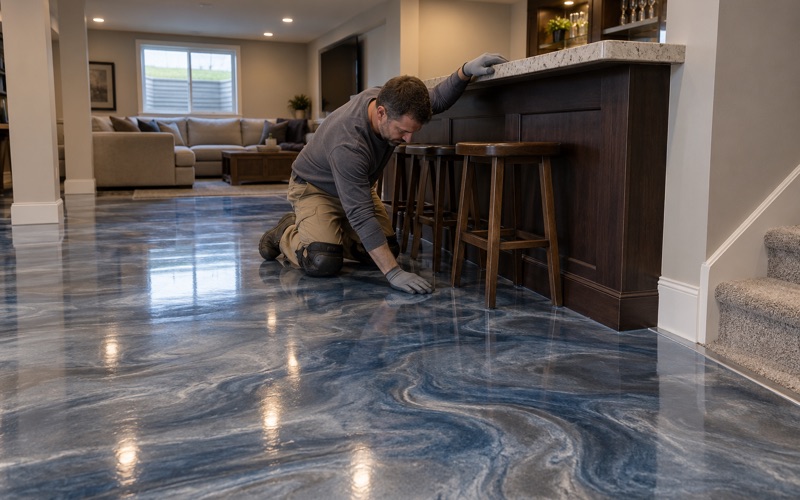
A silver, slate and blue metallic epoxy floor under a home bar in the finished basement of an Ames house.

Metallic Epoxy Floor

Marbled, pearlescent metallic epoxy floors for basements, showrooms and offices, built over a ground and tested slab with a UV-stable topcoat.

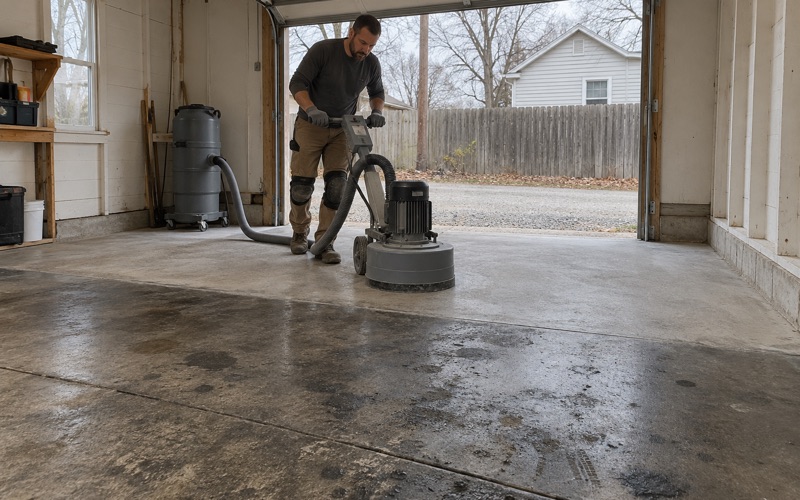
A walk-behind diamond grinder opening a pitted, stained garage slab off an alley in an older Ames neighborhood.

Concrete Grinding

Diamond grinding and shot blasting that strip old coatings, flatten high spots and open concrete to a profile a new floor can grip.

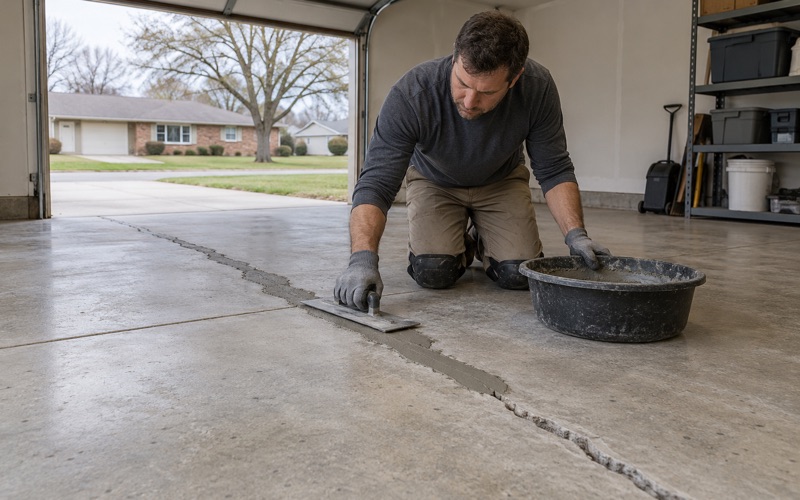
A long crack in an Ames garage slab chased out and filled flush with repair mortar before the floor is coated.

Concrete Floor Repair

Crack, spall, joint and scaling repairs that bring a garage, basement or shop slab back to a sound surface, with an honest call when it needs replacing.

A seamless quartz epoxy floor with a coved base in the treatment room of an Ames veterinary clinic.

Commercial Epoxy Flooring

Seamless, cleanable epoxy floors for stores, offices, clinics, labs and rental properties, installed on nights and weekends when needed.

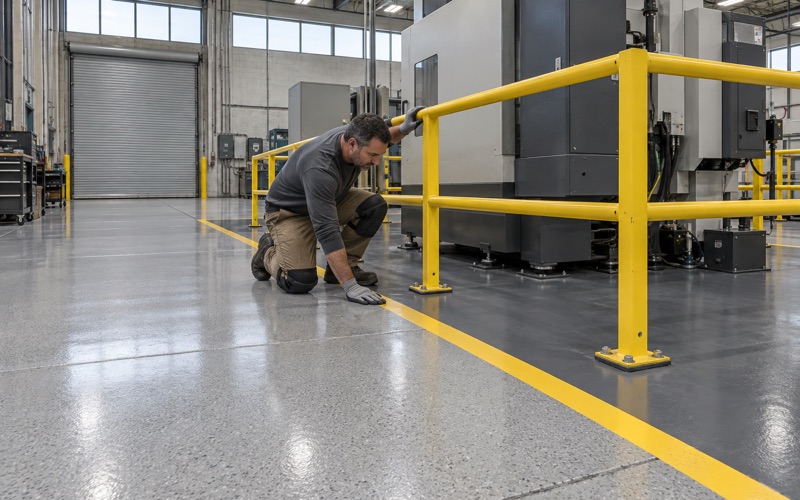
A heavy-build epoxy floor with a striped walkway around a machine cell in an Ames manufacturing plant.

Industrial Epoxy Flooring

High-build epoxy and urethane cement floors for plants, warehouses and shops, shot blasted, repaired and phased around production schedules.

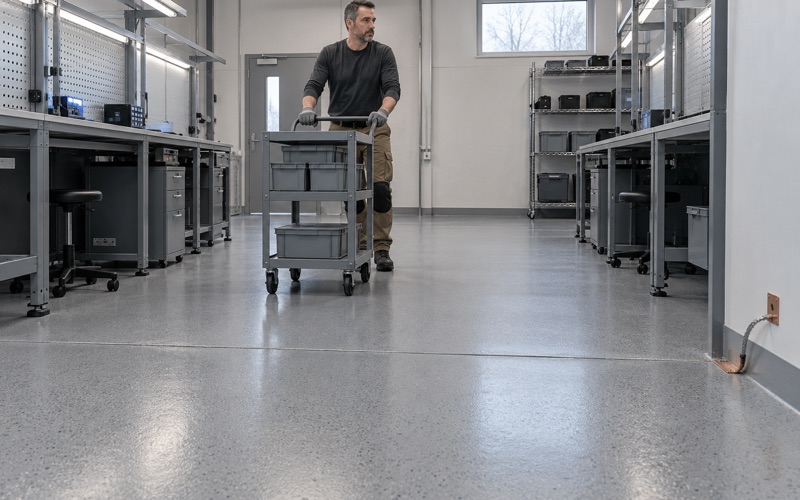
A static-dissipative floor under an electronics assembly cart in an Ames plant, the grounding point set into the floor at the wall.

ESD Flooring

Static-dissipative and conductive epoxy floors for electronics work, labs and server rooms, installed with a grounding plan and tested before handover.

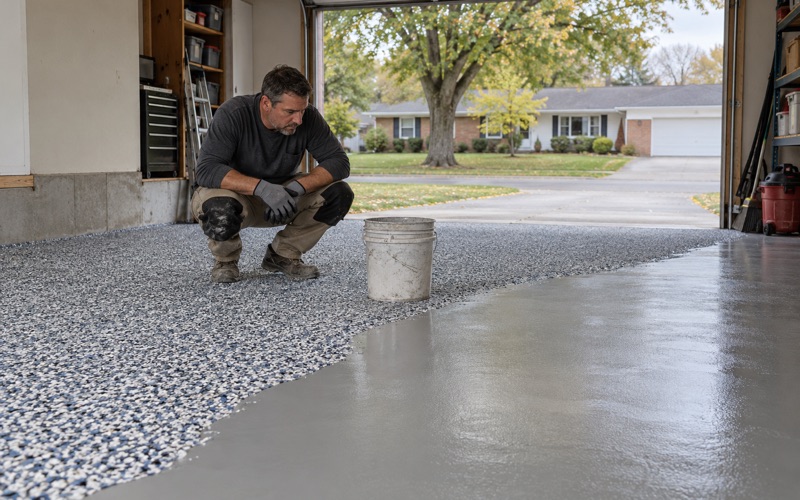
A dense blue-gray and white flake broadcast settled across half of an Ames garage floor, the base coat still showing beyond the edge.

Flake Epoxy Floor

Vinyl flake epoxy floors with full chip coverage and a clear topcoat, built for garages, basements and shops that see grit, salt and daily use.

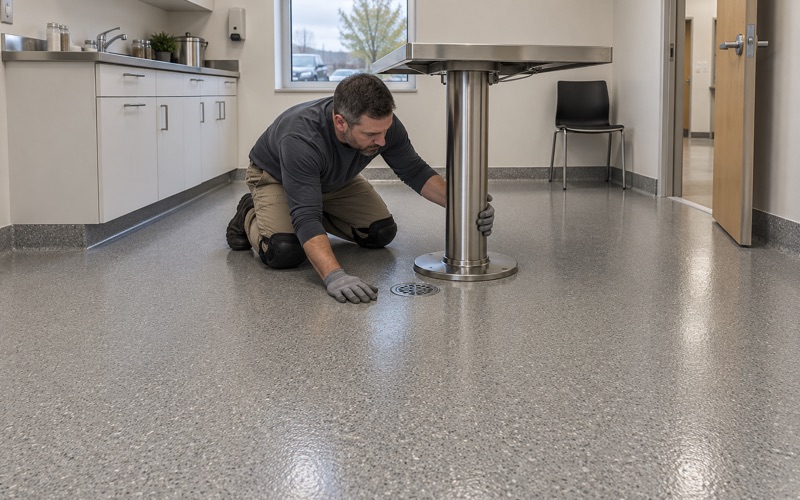
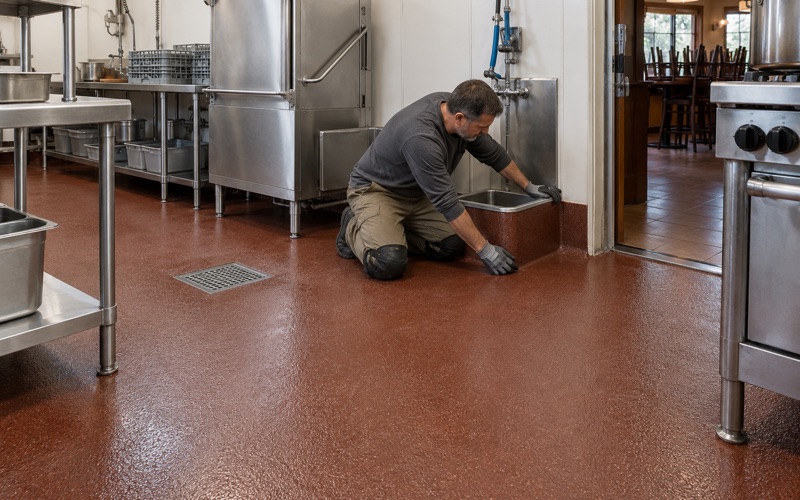
A textured urethane cement floor with an integral cove and a floor sink in the kitchen of an Ames restaurant.

Commercial Kitchen Flooring

Seamless, coved kitchen floors in urethane cement or epoxy, built for hot water, grease, daily wash-down and the Food Code's cleanable-floor rules.

Two Decades on Central Iowa Concrete

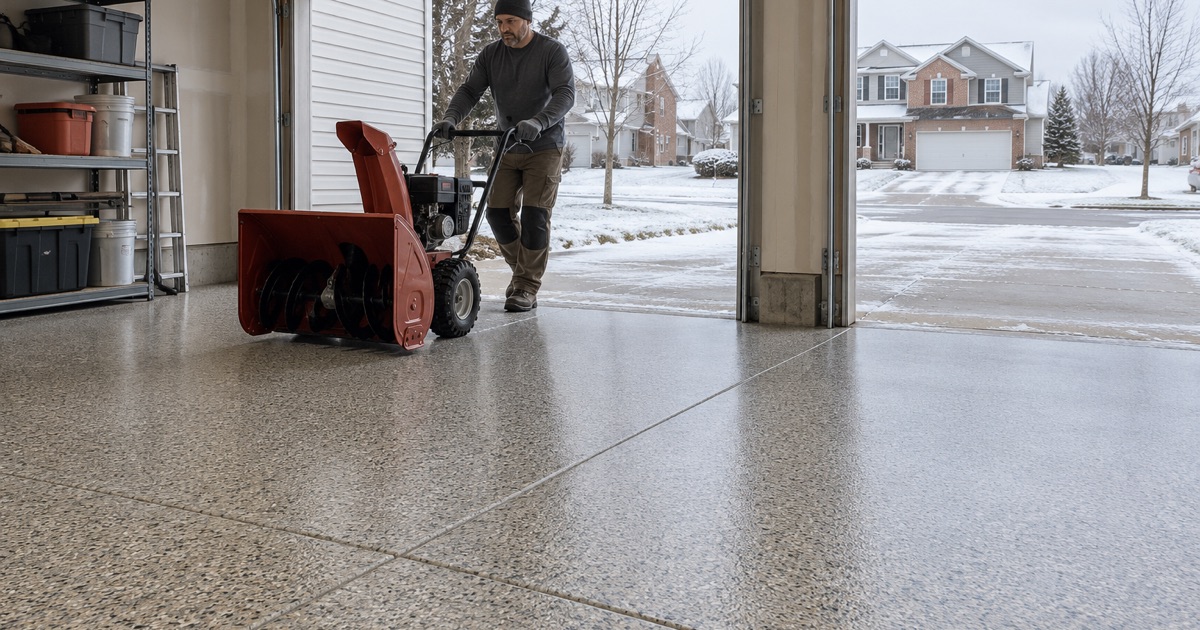
A snowblower wheeled back onto a finished gray and tan flake floor in the attached garage of a newer Ames two-story.

20+ Years of Epoxy Floor Installation

We have been grinding, repairing and coating concrete for more than twenty years, long enough to see which floors hold up and which peel within a winter. That history is why our process starts with testing and slab mapping instead of a sales pitch, and why we will tell you plainly when a floor should not be coated yet.

Why Choose Ames Epoxy Flooring

Mechanical Surface Profile

No slab gets an acid etch from us; every floor is opened with a diamond grinder or shot blaster to an ICRI concrete surface profile, so the epoxy locks into clean, open concrete rather than sitting on a weak etched skin that lets go the first time a hot tire pulls at it.

Moisture Tested in Writing

Before any price is final, a moisture test goes into the written scope on every garage and basement slab, whatever year the house went up, so vapor rising out of central Iowa till shows up on paper instead of as blisters a season later, which is how an untested floor usually announces itself.

Salt-Ready Garage Systems

Each garage system we quote is chosen for the brine and rock salt that ride into Ames garages on tires through the winter, so the topcoat sheds deicer and wipes clean rather than letting calcium chloride soak into bare concrete and scale it the way a thin store-bought film allows.

Dew Point, Not the Calendar

Cure schedules follow slab temperature and the dew point spread at the surface, never the date on the contract, so an unheated Ames garage in January is told to wait rather than coated anyway and left with amine blush, a soft film and poor adhesion that a calendar-driven crew leaves behind.

Warranty Limits Up Front

Moisture is the first warranty exclusion we name, before anything is signed, followed by hydrostatic pressure and slab movement, so you know exactly what the coating covers rather than discovering the fine print after a basement floor starts lifting, which is when many contractors first bring it up.

Dust Captured at the Grinder

Grinding dust goes straight into a vacuum attached to the machine instead of being rinsed toward a floor drain or a storm inlet, so concrete fines stay out of the house and out of Ames storm sewers rather than washed down the driveway by a crew cleaning up with a hose.

The Garage Floor, Start to Finish

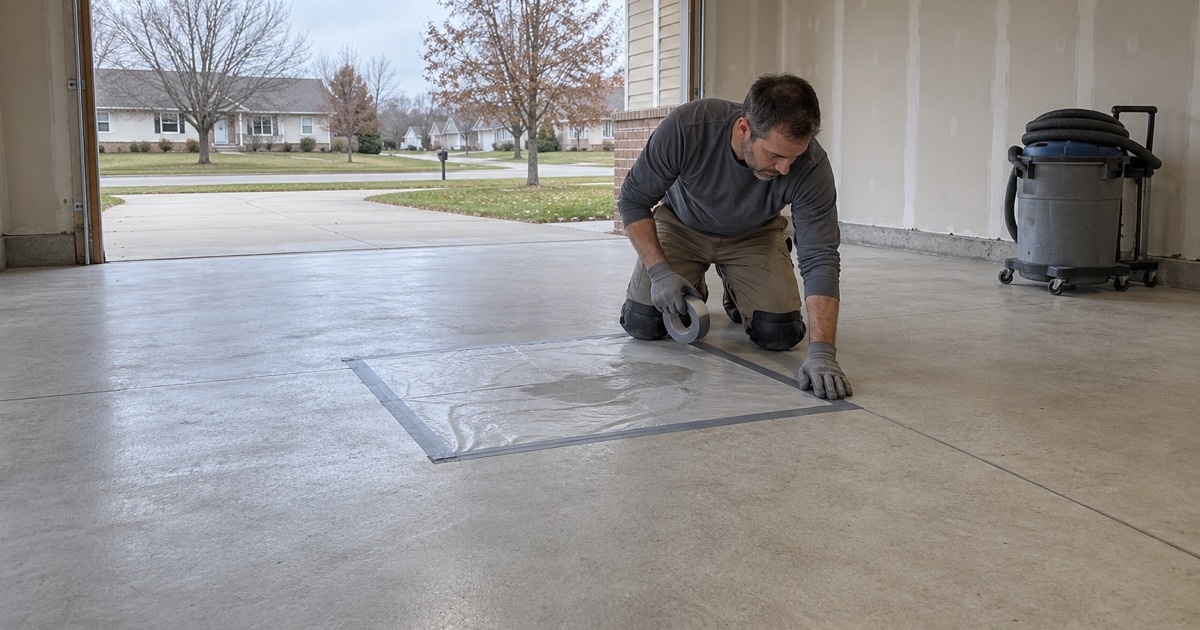
A taped plastic sheet moisture test on a freshly ground garage slab in Ames, read before any coating is mixed.

How an Epoxy Garage Floor Job Runs

A garage job opens with a walk of the slab: we map cracks, check for old coatings and run the moisture test before quoting. Install days cover grinding, repairs, the base coat, a broadcast if one is chosen and the topcoat, followed by a cure period before you park on it. Knowing that sequence early lets you plan where the cars and storage go.

Attached and Detached Garage Coatings

An attached garage shares air with the house, so we seal the entry door, run dust collection on every grinder and offer low-odor products for the coating days. A detached garage gives more room on product choice but is often unheated, which changes when the work can happen. Low-odor products are a comfort and re-entry choice, not something Iowa law requires.

Garage Slab Moisture Testing

Moisture moving up through a slab is the most common reason a garage coating blisters or lets go. We use the ASTM D4263 plastic sheet test as a quick screen, then calcium chloride testing under ASTM F1869 or in-situ relative humidity probes under ASTM F2170 when the numbers matter. The results go into the written scope, so the system we price is one the slab can carry.

Newer Homes and Damp Garage Slabs

The residential code lets a garage slab skip the under-slab vapor retarder a living space needs, through the IRC R506.2.3 exception, so a recently built garage may have nothing between the concrete and the damp ground beneath it. That is why every garage gets tested regardless of the year the house was built. A young slab can also still be giving off its own mix water.

Garage Floor Crack and Spall Repair

Cracks, spalls, popouts and pitting are mapped before pricing, then filled and ground flush so they disappear under the finish. Moving cracks and control joints are treated differently from dead ones, because a rigid fill across a moving crack simply reopens. When a slab is heaved, badly scaled or broken into pieces, we say it needs replacing rather than coat over the problem.

Rock Salt, Brine and Bare Concrete

Calcium chloride brine and rock salt arrive on tires all winter, soak into bare concrete and drive the freeze-thaw scaling that flakes the top layer off a slab. A sealed, coated floor keeps that brine on the surface, where it can be squeegeed out the door instead of soaking in. Our garage topcoats are picked for resistance to exactly those deicers.

Cold-Weather Epoxy Installation

Epoxy and polyaspartic resins need the slab itself, not just the air, inside the maker’s temperature range, and the surface has to stay safely above the dew point while they cure. An unheated garage in a central Iowa winter usually fails both tests, and coating it anyway invites blush and a weak bond. We schedule for spring, or for when temporary heat can hold the slab steady.

Hot Tire Pickup Resistance

Hot tire pickup is what happens when a warm tire softens a thin coating and peels it away as it rolls off, which is why so many garage floors fail in two neat stripes. The usual causes are an etched surface and a thin, low-solids product. A ground surface and a full-thickness build of 100% solids epoxy under a polyaspartic topcoat stand up to tire heat.

DIY Epoxy Kits Compared with a Professional Floor

Most store-bought kits are water-based epoxy paints rolled over an acid-etched slab, leaving a thin film with little grip beneath it. A professional floor starts with diamond grinding, uses 100% solids or high-solids resin, adds a broadcast and finishes with a polyaspartic or polyurea topcoat built to a stated thickness. The gap between the two shows up in the first winter of salt and tires.

Epoxy Garage Floor Cost Factors

The price of an epoxy garage floor moves with square footage, the amount of crack and spall repair, any old coating to grind off, the moisture readings and the system chosen. A single-color epoxy costs less than a full flake broadcast under a polyaspartic topcoat. Your proposal itemizes each of those, so you can see exactly where the money goes.

Basements, Sump Pits and Damp Slabs

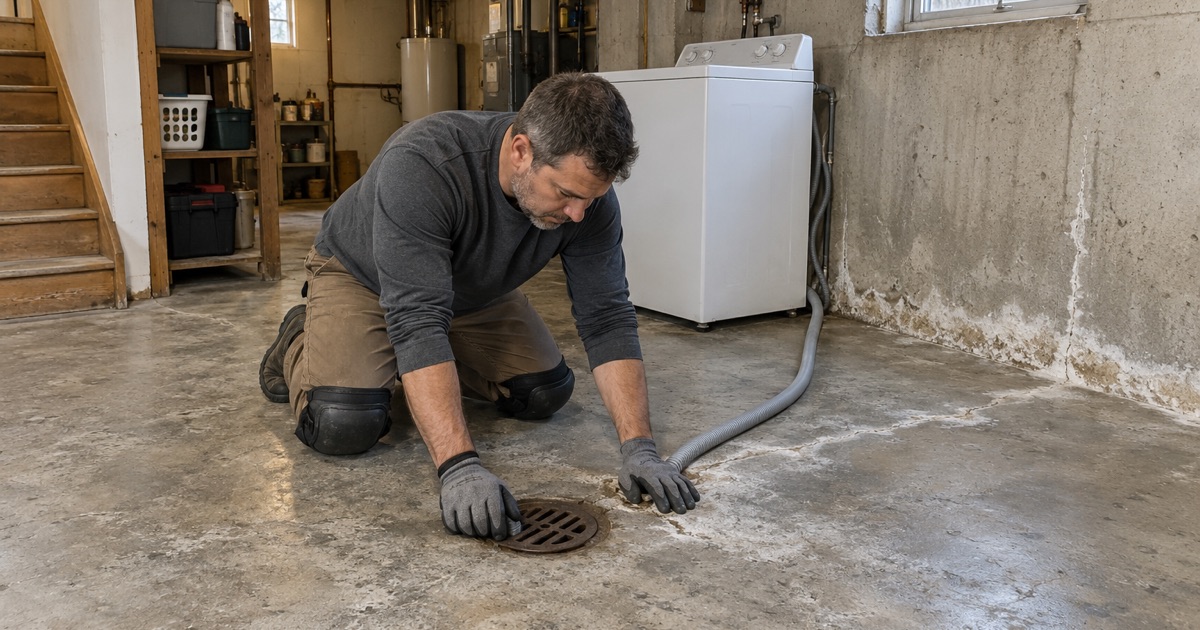
White efflorescence and an old floor drain on the bare basement slab of an older Ames rental house, read before anything is coated.

Basement Floor Epoxy and the Moisture Question

Before a basement floor is coated, we need to know whether water or vapor is coming up through it, because a coating that traps moisture will blister and release. Many Ames basements sit in Des Moines Lobe glacial till, and how wet that ground stays varies from lot to lot. A moisture test and a look at the floor’s history come before any product is picked.

Sump Pits, Drain Tile and Floor Drains

Sump pits, drain tile and floor drains are how a basement manages its water, and a coating has to respect each of them. We confirm the sump runs and the drain is clear before starting, then end the coating cleanly at the pit lid and drain body rather than sealing over anything that needs access. A coating never stands in for working drainage.

Stripping Old Basement Paint, Patching and Tile Glue

Older basement floors often carry layers of paint, patching compound and black tile adhesive from decades of finishes. All of it has to be ground off before a new coating can bond, and old tile mastic needs particular care, since some older adhesives contain asbestos and should be tested before grinding. We tell you what the floor holds before we quote it.

Basements Near the South Skunk River and Ioway Creek

The August 2010 flood on Ioway Creek and the South Skunk River put water into lower levels across parts of Ames. A coated floor near those waterways cleans up far more easily than bare or carpeted concrete once water recedes, but it does not keep floodwater out or stop seepage. A larger lower-level remodel in a mapped floodplain also falls under the city’s floodplain development permit in Municipal Code Chapter 9.

Efflorescence on Basement Floors

White powder or crust on a basement floor is efflorescence: salts carried up through the concrete by moving moisture and left behind when the water evaporates. It tells you the slab is passing water, and it breaks the bond of any coating laid over it. We clean it off, test the slab and choose a system that suits the readings.

Moisture-Mitigation Primers for Damp Slabs

When a basement slab tests above what a standard epoxy tolerates, a moisture-mitigation primer goes down first to hold back vapor beneath the finish system. It adds cost and a step, so we specify it only when readings call for it. It is built for vapor drive, not liquid water under hydrostatic pressure, which needs drainage work first.

Coating After a Basement Water Event

After water gets into a basement, the slab has to be cleaned, dried and retested before any coating goes down, and the source of the water should be fixed first. Coating a slab still wet from below locks the moisture in and all but guarantees a failure. We wait for the readings to come down rather than rush the schedule.

Basement Laundry, Workshop and Home Gym Floors

A coated basement floor works well under a washer and dryer, a workbench or a home gym, where spills, dropped tools and rubber mats would stain or wear bare concrete. We tune the texture to the room, adding grip where water lands and keeping a smoother finish where equipment rolls. Gym mats sit fine on a fully cured coating.

Coating Warranty Exclusions for Moisture

Nearly every floor coating warranty excludes failures caused by moisture vapor transmission and hydrostatic pressure, and many exclude slab movement too. We walk through those exclusions before the job is sold, starting with moisture, so the warranty you get is one you understand. If a basement tests high, that conversation happens before the price is final.

Floor Coatings Are Not Radon Mitigation or Waterproofing

A floor coating seals the surface of a slab, but it is neither radon mitigation nor basement waterproofing. In Iowa, radon testing and mitigation require a state credential under Iowa Code chapter 136B, so we never sell a coating as radon work. Seepage is a drainage problem to solve before any coating goes down.

Color, Flake and Finish

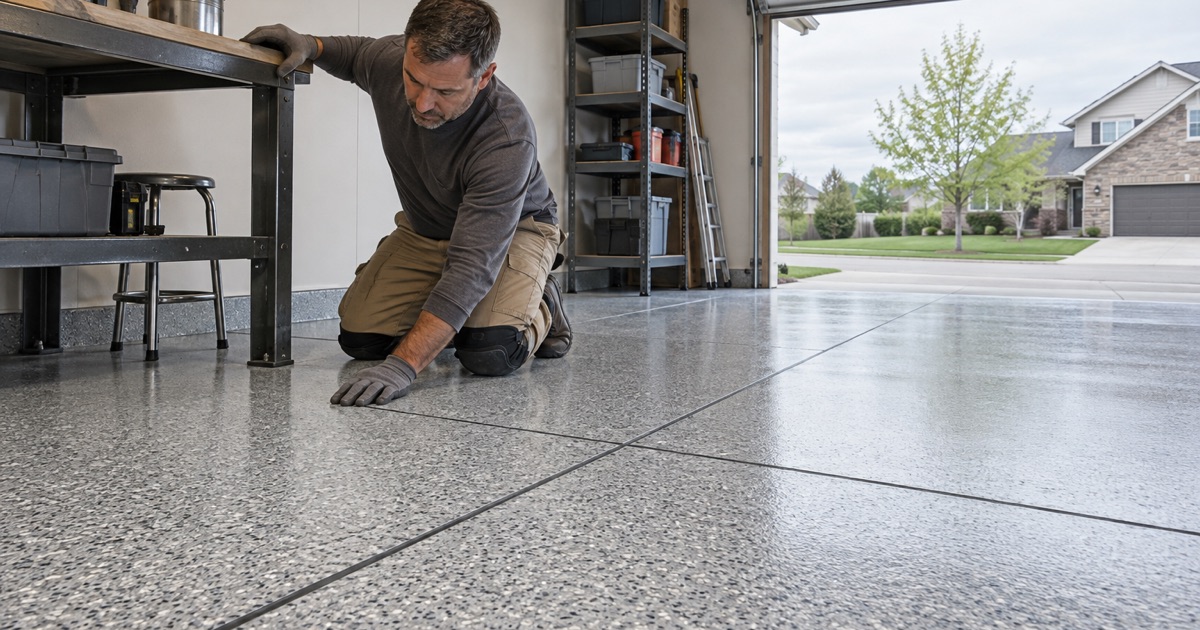
A finished light gray flake garage floor in Ames with every saw-cut joint picked out as a crisp dark line in a grid.

Vinyl Flake Epoxy Floors

A vinyl flake broadcast scatters colored chips into the wet base coat, and the blend and chip size set the look. A full broadcast hides slab blemishes and gives a textured, stone-like finish, while a light scatter lets more base color show. Larger chips read bolder from across the garage; smaller chips give a tighter, more even pattern.

Metallic Epoxy Floor Installation

Metallic epoxy carries mica pigments in a clear resin that is worked while wet into a marbled, flowing surface. It needs a flat, well-prepared slab, a dust-free room and an installer who sets the pattern before the resin begins to gel. It suits basements, showrooms and offices better than a working garage, where sand and tires show wear quickly.

Polished Concrete and Aggregate Exposure

Polished concrete is the slab itself, ground in stages with finer and finer diamonds and hardened with a lithium silicate densifier. How deep the first cut goes decides how much aggregate shows, from a cream finish with almost no stone to full exposure of the rock in the mix. We grind a small test patch first so you can see what your slab holds.

Gloss, Satin and Matte Floor Sheens

A high-gloss topcoat makes a floor look bright, but it also shows dust, footprints and tire marks more than satin or matte. Satin is the usual middle ground for garages and basements. A lower sheen also hides small surface flaws better under the raking light that comes in when a garage door opens.

Quartz Broadcast Epoxy Systems

A quartz aggregate broadcast seeds colored quartz sand into the base coat, adding color and a durable, slip-resistant texture in one step. It is a common pick for commercial kitchens, locker rooms and wet areas where grip matters. The texture comes from the grit size and the topcoat build, so we specify it rather than promise it.

Solid Color Epoxy Coatings

A solid color coating, with no flake or quartz, is the plain and practical choice for a shop, a utility room or a warehouse aisle. It cleans easily, makes dropped parts easy to spot and costs less than a decorative system. A light gray is popular because it brightens a room without showing every speck.

UV Exposure and Epoxy Ambering

Standard epoxy yellows, or ambers, under ultraviolet light, which shows most near a garage door or a sunny window. A polyaspartic or aliphatic polyurethane topcoat resists that color shift far better. On any floor that sees daylight, we put a UV-stable topcoat over the epoxy base.

Saw-Cut Lines, Borders and Logos

Saw-cut lines can divide a floor into tiles or panels, borders can frame a showroom or a parking bay, and a business logo can be set into a lobby floor. Each needs planning before the base coat goes down. Existing control joints can also be kept as design lines rather than hidden.

Labs, Rentals and Commercial Floors

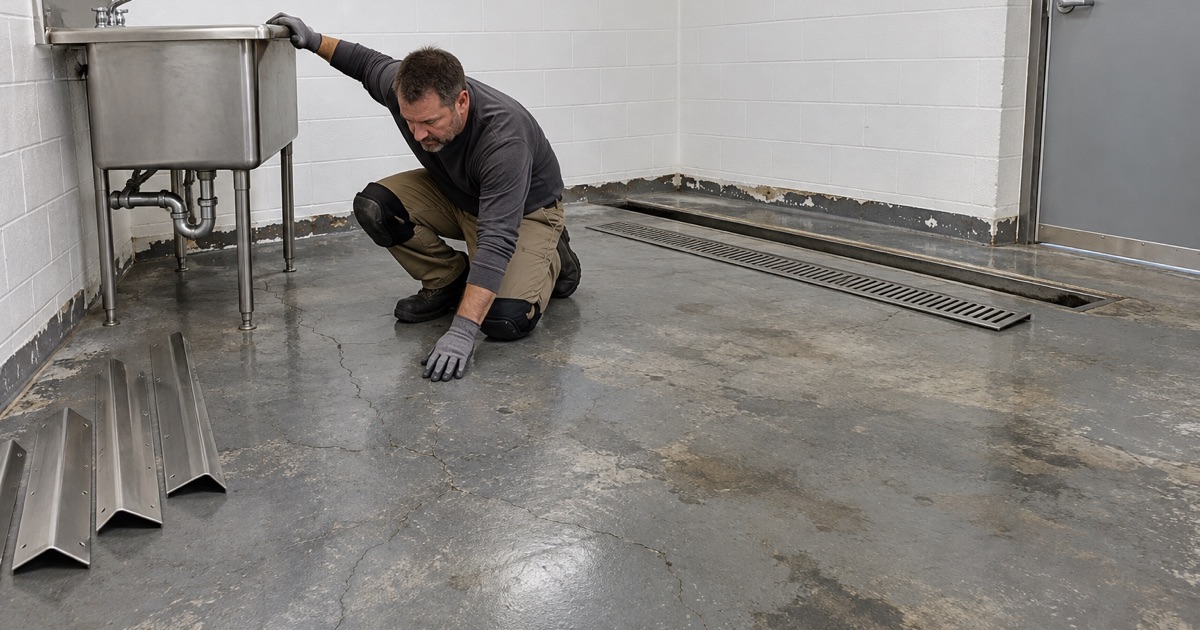
A cracked old epoxy floor in an Ames animal research room, the trench drain grate lifted out before the floor is refinished.

Commercial Floor Projects Compared with Home Jobs

A commercial floor brings a schedule set by the business, larger square footage, heavier traffic and often a written specification from an owner or architect. Prep moves to larger grinders or shot blasters, and the system is chosen for the chemicals, loads and cleaning the floor will face. Pull-off adhesion testing under ASTM D4541 confirms the bond where a spec calls for it.

Lab and Animal-Room Floors with Integral Cove

Research floors need a seamless surface that runs up the wall as an integral cove base, so wash-down water never reaches the joint between floor and wall. In Ames, a USDA solicitation sought epoxy floor coating and repair for animal rooms at the National Centers for Animal Health, the kind of work these rooms demand. We build textured, coved systems that stay safe underfoot when wet.

Manufacturing Floors Under Oil, Coolant and Dropped Parts

Manufacturing floors take oil, coolant, hydraulic fluid and dropped parts every shift. We use thicker, high-build epoxy or urethane systems that resist chemical attack and impact, with added texture near machines where fluids land. Work is phased around production so a line never has to stop for the whole job.

Urethane Cement for Hot Water and Harsh Cleaners

Where hot water, steam cleaning or strong sanitizers would soften an epoxy, urethane cement is the better choice. It handles thermal shock and aggressive cleaning far better and can be installed with an integral cove. It is the standard answer for food plants and kitchens that wash down every day.

Warehouse and Distribution Floor Coatings

Warehouse floors take forklifts, pallet jacks and constant traffic, which wear out a thin coating at the turning points first. We favor high-build epoxy or a densified, polished slab depending on use, and add striping for aisles and staging lanes. Joint repair at forklift crossings stops the edge spalling that hard wheels cause.

Farm Shop and Equipment Dealer Service Bay Floors

Farm shops and equipment dealer service bays deal with mud, hydraulic fluid, grease and heavy machines. A coated floor makes leaks easy to spot and clean up, and it brightens the shop by bouncing light around. We test these slabs carefully, since a shop slab poured without a vapor retarder can push a lot of moisture.

Restaurant Kitchen Floors and the Coved Base

The 2017 FDA Food Code, adopted in Iowa through 481 IAC 31, wants floors that are smooth, durable and easily cleanable, with coved floor and wall junctures under section 6-201.13. Section 6-201.11 allows antislip surfaces where safety calls for them. Story County food establishments are inspected by Iowa DIAL, so we build kitchen floors with both sections in mind.

Rental and Multi-Unit Floor Turnover

Rental houses, duplexes and apartment common areas need floors that survive tenants and can be finished between leases. We schedule the coating so a unit is done, cured and ready before the next move-in. Ames rental inspections under Municipal Code Chapter 13 look for a nonabsorbent toilet-room floor surface, which a properly coated floor can provide.

Office, Clinic and Showroom Floors

Offices, clinics and showrooms need a floor that looks finished rather than industrial. Metallic epoxy, polished concrete and fine-chip flake systems give a clean, modern surface that wipes clean in seconds. We schedule this work after hours so customers and patients never see a crew.

VOC Limits and Low-Odor Floor Coatings

The federal architectural coatings rule, 40 CFR 59 Subpart D, sets VOC limits for floor coatings sold nationwide. Even compliant products can carry an odor during installation, so we still offer low-odor options for occupied buildings and attached spaces. That choice is about comfort and re-entry, not a separate Iowa requirement.

Night and Weekend Floor Installation

A business that cannot close gets its floor in phases, with sections done overnight or on weekends and fast-cure polyaspartic topcoats where turnaround is tight. Labs, plants and shops are scheduled around shifts and research timelines. Each phase is planned so the space reopens when promised.

Areas We Serve

Ames Epoxy Flooring provides epoxy-flooring throughout the greater Ames area, with the same crews and the same standards on every job.

Good to know

Frequently Asked Questions

How much does an epoxy floor cost in Ames?

Price follows the square footage, the amount of crack and spall repair, any old coating that has to come off, the moisture readings and the system you choose. A single-color coating costs less than a full flake broadcast under a polyaspartic topcoat. We quote after testing the slab, and the written proposal lists the product line, the coats and the finished thickness.

How long does an epoxy floor installation take?

A typical garage or basement runs a few days from grinding to the final topcoat, longer when the slab needs heavy repair or an old coating stripped. Foot traffic usually returns well before vehicles do. A cold slab cures more slowly, so winter schedules are set by slab temperature rather than a fixed day count.

Can you coat my garage floor in winter?

Only when the slab itself can be held inside the product's temperature range and safely above the dew point while it cures. Most unheated central Iowa garages cannot manage that in deep winter, so we either bring in temporary heat that holds the slab steady or recommend waiting for spring.

Will an epoxy coating stop water coming through my basement floor?

No. A coating seals the surface but does not stop seepage or hydrostatic pressure, and water trapped under a coating is the most common cause of blistering. Drainage problems are fixed first, then the slab is tested, and a moisture-mitigation primer is added when vapor readings call for it.

What is the difference between epoxy and polyaspartic?

Epoxy builds thickness and bonds well to ground concrete, which makes it a strong base coat. Polyaspartic cures faster, holds its color under sunlight and resists abrasion, so it is often used as the topcoat over an epoxy base. Many of our garage systems combine the two.

Will a coated floor be slippery when wet?

A smooth high-gloss floor can be slick with water, snowmelt or oil on it. We set the grip by the broadcast and the topcoat, adding flake, quartz or a fine aggregate where a floor gets wet, and tell you in the proposal what texture the floor will have.

Can you remove an old peeling coating before recoating?

Yes. Old paint, failed epoxy and tile adhesive are ground off down to sound concrete, because a new coating is only as strong as whatever it sits on. Older black tile mastic may need asbestos testing before anyone grinds it, and we raise that before quoting.

How do I clean and care for an epoxy floor?

Sweep or dust-mop grit regularly, since sand is what dulls a topcoat. Wash with a mild cleaner and a soft mop or squeegee, and in winter push salty slush out the door rather than letting it dry on the floor. Avoid harsh solvents unless the system was specified for them.

Can a new concrete slab be coated right away?

No. Fresh concrete has to cure and give off its mix water before a coating can bond reliably, and a new slab can test wetter than an old one. We test the slab when it is ready rather than relying on the pour date.

Ready to Get Started?

Request a free quote today and we'll get back to you fast.